The South Caucasus has historically been at the center of great-power competition due to its unique location, which sits on the fault line between Europe and the Middle East. The nation of Georgia is now embroiled in domestic strife, as the ruling Georgian Dream party has faced massive protests against its erosion of democratic institutions and reversal of deepening ties with the West. Amidst this instability, China and Russia have stepped up their attempts to gain regional influence in the South Caucasus. Given the rising competition between the West and an emerging autocratic bloc over vulnerable states such as Georgia, the stakes are high.
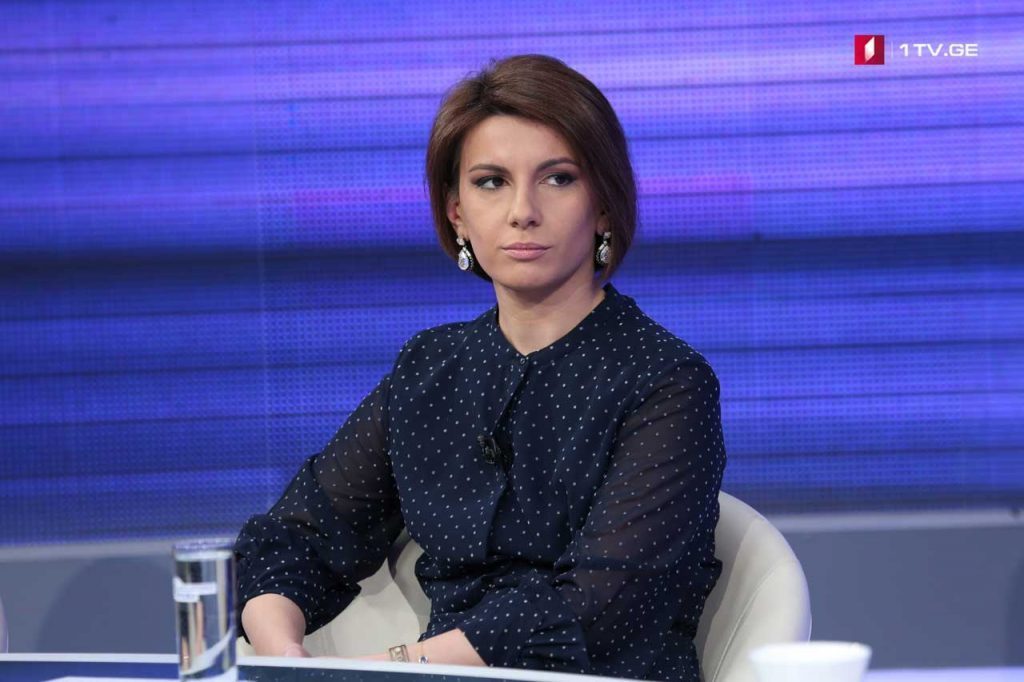
Tamar Chugoshvili is a Georgian lawyer and democracy advocate, and is currently one of the sixteen Yale World Fellows. She previously served as the First Vice-Speaker of the Parliament of Georgia from 2016-2019, where she spearheaded various institutional reforms and anti-corruption initiatives. This interview was organized by the Yale Review of International Studies (YRIS) and conducted with the assistance of Aiden Wasserman, President of the Boston Risk Group.
Riley Avelar is a junior at Yale College and a member of YRIS, an undergraduate journal dedicated to publishing both opinion and long-form scholarship on contemporary and historical global issues.
On Democracy and Georgia's Challenges
Riley: Thank you for taking the time to speak with us today. Could we get a brief introduction of who you are, what you do, and your work history?
Tamar: Thank you for having me for this interview. My name is Tamar and I'm a Yale World Fellow. This is a program at Yale University that is run by the Yale International Leadership Center. It is the most competitive program here at Yale, which brings together 16 world fellows each year for one semester from different countries and backgrounds. I come from Georgia. I'm a lawyer and a former member of parliament with 20 years of experience working in a civil office in the political sector. Most of my experience focuses on promoting, creating, and building democratic institutions, particularly by reforming representative institutions such as Parliament and local councils, and on promoting accountability and transparency in executive institutions.
Aiden: Awesome! You have long been an advocate for transparency, parliamentary reform, and anti-corruption mechanisms. Georgia's history has been marked by several periods of democratization and backsliding throughout the Saakashvili and Georgian Dream eras. Given these repeated patterns, what do you believe are the necessary preconditions for a durable and long-lasting democracy in Georgia?
Tamar: So indeed, you're absolutely right. Basically, in my lifetime, I have observed Georgia completely collapse and be devastated, then rise from the ruins, and collapse again. After the collapse of the Soviet Union, Georgia had a war with Russia, a civil war, and then complete anarchy to follow. So we've been very vigilant on reforming, improving, and rising from this collapse. And I think that if we want to understand global politics, we should start not from Washington, DC. We should start with places like Georgia, like the Caucasus, and why? Because this is a place where these global interests really clash.
Geographically, we are located between the West and the East. We are the meeting point of West and East, and throughout the centuries, interests from Eastern countries have sought to influence the region where Georgia lies. That is what China calls One Belt, One Road: a transit route it wants to use to trade with the West, so the Caucasus is a very important region for them. This region is also very important to Russia, as Russia wants to maintain this part of the world as its backyard. It wants to prevent us from joining NATO. It also wants to prevent us from joining the EU. And at the end of the day, the last thing they want to see is a country in the former Soviet order prospering as a democratic state.
While the US and the West dominated world politics after the Cold War, the United States' presence in Georgia was very strong. The US was supporting Georgia to build our country up against a neighbor that really is our enemy. So for us to exist and to develop as an independent country, we needed a strong friend. And that strong friend for us has been the US and the West.
It was young people, people your age, years ago, who started working at very high offices in the civil service. Some of them became members of parliament. They themselves were contributing to the creation and passage of new legislation and rules that shifted our country's direction. After the US recently decided it did not want to be the world's hegemonic power, we saw the role of the West and the United States decrease. In our region, the power and interests of China and Russia are increasing, and that has an immediate impact on democracy and domestic affairs. So Georgians were basically left feeling alone in this process to push back against massive powers and dictatorships.
Young Georgians are right now in a very difficult situation, because they are fighting desperately. Youth as young as 21 years old are imprisoned due to ongoing strife. For example, one year ago, a youth was just protesting in the street with thousands of other Georgians, and he was randomly arrested by the police. He was sentenced to four years of imprisonment despite committing no crime. So it is difficult for us, the citizens, to continue this fight for democracy without any outside support.
All support from the United States, including USAID, the National Democratic Institute, and other American organizations, is gone. USAID was essential in providing funding and resources for people who wanted to build democracy in their own countries. All of that is gone with the Trump administration's decision. That has left Georgia in a challenging situation, with propaganda coming from foreign press. The foreign press coming from China, Russia, and even from inside Georgia is all trying to destroy the democracy that we have built up to now. It's a difficult, challenging moment for us. So, for a small country like Georgia, it's not enough to only have a people with a desire to build a democratic nation. We also need global powers to support our cause.
Constitutional Reforms and Opposition
Riley: You've been deeply involved in Georgia's constitutional reforms, from the successful 2017-18 amendments that transitioned the nation to a Parliamentary Democracy to the failed 2019 effort to transfer to a fully proportional system by 2020. Given this experience, do you believe that state institutions are strong enough to prevent the GD from amending the constitution to codify their hold on power? Furthermore, how likely do you see this as happening?
Tamar: Although the ruling party very much wants to amend the constitution, our constitution clearly states that Georgia's future lies in further integration with the European Union and NATO. I believe the ruling party wants to remove this statement from the Constitution, but it cannot do so because amending the Constitution is very difficult in the Georgian system. Constitutional amendments require a very high amount of support in the parliament and must be approved in two separate parliamentary sessions. The ruling party does not have enough members of parliament to make such a change, and I hope they will never get enough seats to amend the Constitution. So at this point, they've only managed to capture basically all the state institutions. The Constitutional Court is no longer independent. The Parliament cannot function effectively, but the majority is still not powerful enough to amend our constitution in a way that would allow them to delete whatever they dislike.
Aiden: I saw in an article you mentioned that the Georgian opposition could improve its effectiveness through greater unity among opposition parties and by adopting nontraditional protest methods to increase visibility. However, what stood out to me was your call for greater participation from the business sector, which has increasingly opposed the GD. How and why do you believe that business could play such a critical role in political opposition?
Tamar: I've been quite critical about how the opposition has handled the process, but it's very difficult for me to speak about it right now. Most of the opposition leaders are in jail, and you cannot criticize people who are political prisoners. So I'm trying not to do that.
As for the business sector, the political process needs money. Somebody has to fund political competition, and the ruling party is led by a billionaire oligarch. That party has all the resources in the world. They control the entire state budget. They have a world salesperson leading them, and they have all of Georgia's major businessmen surrounding and supporting them. Even if businesses do not really like them, they still have to support the ruling party because of the system. They just don't want to make enemies with the system.
However, to have a competitive political process, someone has to fund the opposition as well. How can you oppose the ruling party, which has so many resources, if there is no funding on your side? So it is very important to find independent sources to fund campaigns. Although securing this funding from the business sector is difficult, an unusual phenomenon is occurring: crowdfunding. We've seen many people donate small amounts of what they own, even though they are not wealthy and often lack resources themselves, yet they still contribute to the opposition's cause. These funds are used to help political prisoners and their families. I think crowdfunding can help us in the future, not just to create political resistance, but also as a source of income and funding for the opposition. Without funding, it's impossible to engage in a campaign and therefore challenge the ruling party.
Geopolitics and Regional Stability
Riley: Moving to a more global level, Georgia certainly stands at a unique crossroads geographically, historically, and geopolitically. It lies along both the ancient Silk Road and today's Belt and Road Initiative, while navigating the competing influences of major powers. How can Georgia position itself as a connector politically and economically while preserving genuine strategic autonomy?
Tamar: This is difficult to do when you're a small nation facing global powers, but we must do so. That's the only way Georgia can maintain its existence and its identity as a country of Georgians. We need to prosper as a democratic state and integrate more with the West, but we also need to engage with other powers, such as China. However, that can only happen if Georgia can continue to count on and retain support from the West. These are the only powers that would respect a small nation as an independent and sovereign country. Russia does not respect the independence or sovereignty of neighboring smaller nations. Russia considers us as part of their territory, to which they can do whatever they want. This is why Georgia wants to be part of the West: European countries respect other nations, cultures, languages, and territories. Russia does not. The only way for Georgia to maintain its sovereignty and identity is to keep integrating with the EU and to become a member state. While we seek to have constructive relationships with powers such as China or Russia, I don't think this is currently possible.
Aiden: On the topic of regional stability, the resolution of the Nagorno-Karabakh issue has had significant implications for security in the South Caucasus. Do you believe this is a genuine turning point towards greater regional stability or perhaps an invitation for more great power competition in the South Caucasus?
Tamar: It is very important that the Armenian-Azerbaijan conflict in the Caucasus permanently ends. This conflict has been going on for decades and has been devastating. It is impossible to focus on constructive things, such as the economy and the well-being of the people, when two of the three countries in the South Caucasus are at constant war.
A positive development was the United States' role in negotiating a peace deal between the two countries. But this peace is still too fragile. We still don't know whether this deal will last. There is still a lot of work that needs to be done for lasting peace. Anything could spark a new conflict. If a long-lasting peace is achieved, this will enable greater opportunities for the region. It would enable us to work on joint economic projects that would make all of us in the region powerful forces in the future.
The Ukraine War and Generational Divides
Riley: I'd like to talk about Ukraine for a moment. Since the invasion of Ukraine, Georgia's geopolitical importance has sharply risen. From Zelenskyy's initial pressure on Georgia to open a second front against Russia to the thousands of Georgian volunteers in Ukraine, these cases highlight the ties between the nations. Do you think Ukraine has become a polarizing issue in Georgian politics, and how have both political sides framed it? And finally, how do you see the outcome of the conflict in Ukraine affecting Georgia?
Tamar: This war has had a tremendous impact on Georgia and our government. I'm ashamed of what our government did in this regard. The Georgian government has been using Russia's devastating invasion of Ukraine for its own benefit. Basically, the central message of the Georgian government has been that Ukraine could have avoided the war if it had played smart, and it did not. So the government is blaming Ukrainians instead of saying what really happened. And what really happened is that Russia invaded Ukraine. As simple as that. There is no blame on the Ukrainian side, and no one can blame it on them, which our government shamefully does.
The Georgian ruling party is trying to convince Georgian citizens that it is a good party to have in power because it will keep Georgia out of war. Because Georgians have trauma from numerous past wars, people are really wary of future wars. Instead of showing proper support to Ukrainians, I think that the Georgian government has been very negative, and in the most negative way, has manipulated the war in Ukraine for their own benefit. That is a very shameful thing to do.
Aiden: So it seems like there's a very big generational divide among Georgians. Why do you think that older people drew the lessons from the wars in the 90s and the 2008 war to be highly risk-averse and not to incite another conflict? On the other hand, why might younger people view foreign affairs through a more nationalist and revanchist lens?
Tamar: There is definitely a national generational divide. We have one generation that was born and raised in the Soviet Union. We have another who was born and raised in an independent and democratic country. The mindsets of these people are entirely different. Young people want freedom, independence, and opportunities in their own country. They want to live like young people across Europe, where there are plentiful opportunities, they can think what they want, and say what they want. They want the ability to make decisions and achieve success in their lives.
The older generation is driven by a fear that there is worse to come. This is something difficult to overcome, but it can only be overcome over time. Older generations have the beliefs they do about politics because they grew up in a dictatorship, where this was the normal state of affairs. They were also the victims of constant conflicts and wars, so it's very difficult to convince them to change their mindset because that is what they grew up with.
For the young people, though, it's hard to get used to the idea that they should have no opportunities or freedom. Unfortunately, in their own homeland, the only way to find a better life is to escape, go elsewhere, and run away to start a new life. That's our critical dilemma. However, the future is still with Georgia's youth. Young people are always the future. The law is always on the side of young people, so I think they will prevail.
The Foreign Agents Law
Aiden: I wanted to ask a bit about the foreign agents law passed last year, which drew close comparisons to similar laws in Russia and Belarus. This law has significantly restricted the ability of civil society institutions to function. I would like to know whether you see this event as a watershed moment, codifying a shift in foreign policy toward Russia, or as part of a continuing trend toward closer ties with Russia?
Tamar: It was definitely a very significant moment, but it was just one piece in a long chain of developments. The foreign agents law is a terrible invention of Russia, enabling the government to label anyone who criticizes the regime as an agent of foreign countries. One of the fellows at Yale is from Russia, and he has been labeled by the Russian government as a foreign agent under a similar law. This law is an instrument to silence and demonize people.
The initial attempts to pass this law sparked a huge public outcry. Major protests prevented the government from enacting the law for over a year. However, now it's been enacted. It is one piece of a broader government strategy to drift away from the West and bring Georgia closer to Russia. Georgian civil society had been receiving funding from international organizations for nearly three decades, including the European Union and USAID, but under the Foreign Agents Law, we can receive this funding only with the Georgian government's permission.
So imagine that you're seeking funding for a project that focuses on anti-corruption work or on helping political prisoners in Georgia. You'd need funds for that. The government says you can't receive that funding without their permission. The government would never enable anyone to receive funds for any work that would expose their corruption or other wrongdoings.
Looking Ahead
Riley: One final question: looking ahead, what gives you the most confidence in Georgia's political future? What should the next generation of global leaders understand about the challenges of small state governance?
Tamar: Even though the developments are very adverse at this stage, I see this whole ordeal as a process. Throughout Georgian history, the country has fallen and risen and fallen and risen again. I see this current ordeal as another stage, a difficult period for us, but one from which we will find our way out. The primary source of hope for us is that the people simply do not want to spend their lives under a single dictator and are currently fighting to reclaim their dignity and freedom. Unfortunately, political parties and processes have not been able to channel the public's will into political and governmental change.
However, the essential takeaway is that Georgia's current situation is a lesson not just for small countries but also for larger nations. This political conflict began due to rising polarization. Everything started with the deliberate spread of lies that divided society, making people refuse to talk to one another or communicate opposing opinions. Polarization and hatred are products of the propaganda machinery of state television and foreign sources, especially the influence of Russia and China. Those actors divide society in a dramatic and very negative way. When it comes to protecting democratic institutions, Georgia reveals some signs that nations must watch out for: any attack on the judicial system is very dangerous, and political polarization is also very dangerous. So I hope Georgia's present situation can serve as a lesson for other nations to identify and detect those worrisome traits in their early stages and then eliminate them.
Aiden: Thank you for your time, Ms. Chugoshvili!